
Marius and His Father’s Legacy
Les MisérablesThis thread follows Marius from estrangement from Georges Pontmercy to a mature understanding of his father’s sacrifice and beliefs.
increasing Bearing strength in each event
 decreasing
Bearing strength in each eventdecreasingA Father Kept at a Distance
A Father Kept at a Distance
A divided household
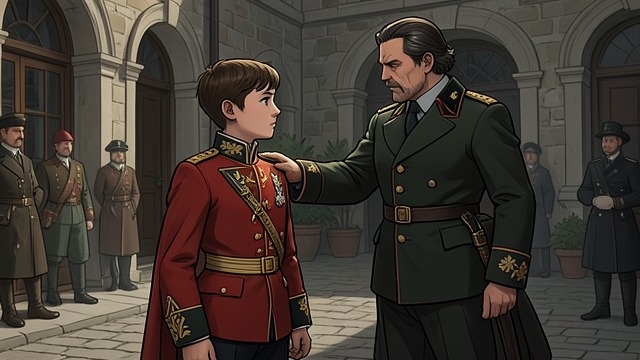
Marius is raised by Gillenormand, whose royalist convictions conflict with those of Georges Pontmercy. The boy grows up believing that his father abandoned him.
Gillenormand’s account leaves Marius with political prejudice in place of personal knowledge. Father and son remain separated by both distance and ideology.
An inherited misunderstanding
Marius accepts his grandfather’s judgment and thinks of Georges as a disloyal soldier. He does not know that the separation was imposed on his father.
The misunderstanding prepares a painful reversal: the person Marius dismisses is the one whose love and sacrifice he most needs to recognize.
Too Late in Vernon
Too Late in Vernon
A delayed visit
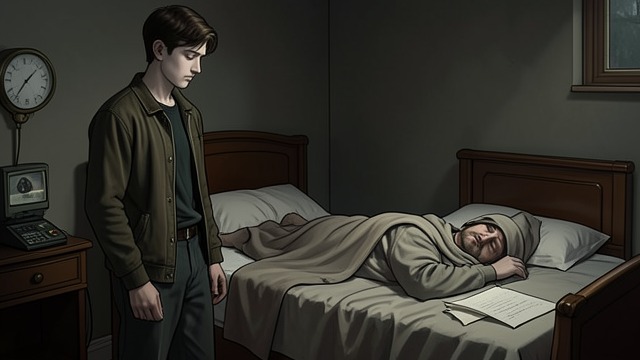
Gillenormand sends Marius to see his ill father, but the journey is delayed by poor communication. Marius arrives at Vernon after Georges has died.
He sees the dead man’s battle wounds and a tear on his face. The sight reveals a tenderness Marius had never permitted himself to imagine.
The final request
A note explains that Georges was made a baron by Napoléon Ier and asks his son to honor that legacy. It also asks Marius to help Thénardier, whom Georges believes saved his life at Waterloo.
Marius takes the note, but its meaning does not yet transform him. The father’s last words become a moral and political inheritance he will understand only later.
The Son Changes Sides
The Son Changes Sides
A belated education
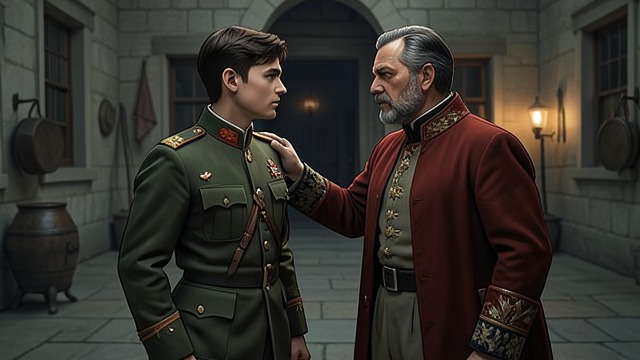
An old companion of Georges tells Marius about his father’s bravery and political commitments. Marius learns to see the soldier not as a distant traitor but as a man of courage and principle.
He begins to honor Georges’s name and adopts the title his father wanted him to carry. This change separates him from Gillenormand’s royalist household.
A quarrel and departure
Gillenormand rejects Marius’s defense of his father and mocks the family’s imperial title. Marius answers with a political insult and is ordered to leave.
The rupture is painful, but it marks Marius’s first independent commitment. He leaves his grandfather’s home with little money and no settled plan.
Poverty as a Test
Poverty as a Test
Life without support
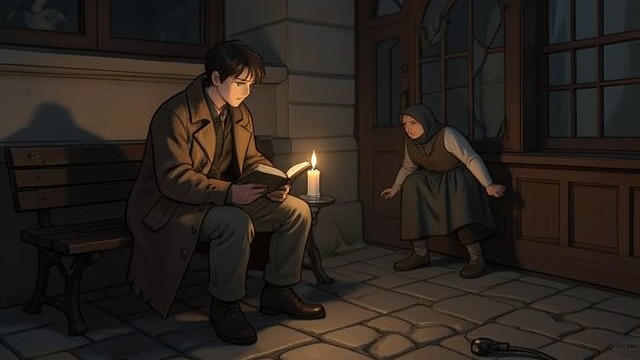
Marius refuses the money sent by his family and lives in severe poverty. He sells belongings, takes small jobs, and struggles to maintain his studies and dignity.
His hardship becomes a test of independence rather than a simple badge of virtue. He must learn what deprivation does to ordinary choices and self-respect.
An unrecognized inheritance
Georges’s example gives Marius a new political identity, but he still has much to learn about his father’s emotional life. His regard for the dead man grows through memory and reflection.
The period shapes the young man’s sympathy for the poor and prepares him to act in the upheavals of 1832.
From Paternal Lesson to Sacrifice
From Paternal Lesson to Sacrifice
A remembered example
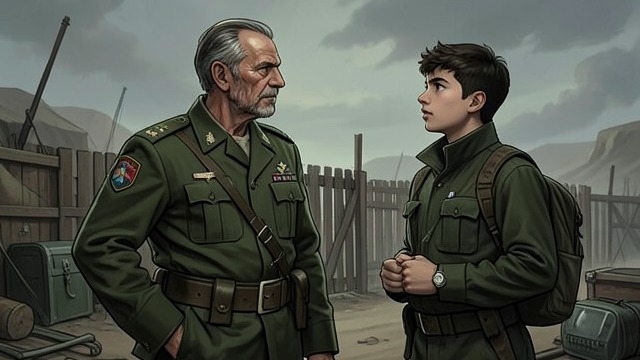
At the barricade, Marius thinks of Georges’s military life and asks what kind of courage his father would have recognized. He knows that the conflict is not a foreign campaign but a civil struggle.
His thoughts bring admiration and doubt together. The father he once neglected now shapes his understanding of public duty.
A choice of his own
Marius decides that commitment to liberty may justify joining the fight. His choice is not a reenactment of Georges’s wars but an attempt to live by the courage he has inherited.
The father’s example becomes personal rather than merely political: Marius must risk himself, not simply claim his father’s name.
Marius’s childhood, during the Bourbon Restoration
1827, at Vernon
After Georges’s death, in Paris
During Marius’s early student years
June 1832, before Marius enters the barricade
